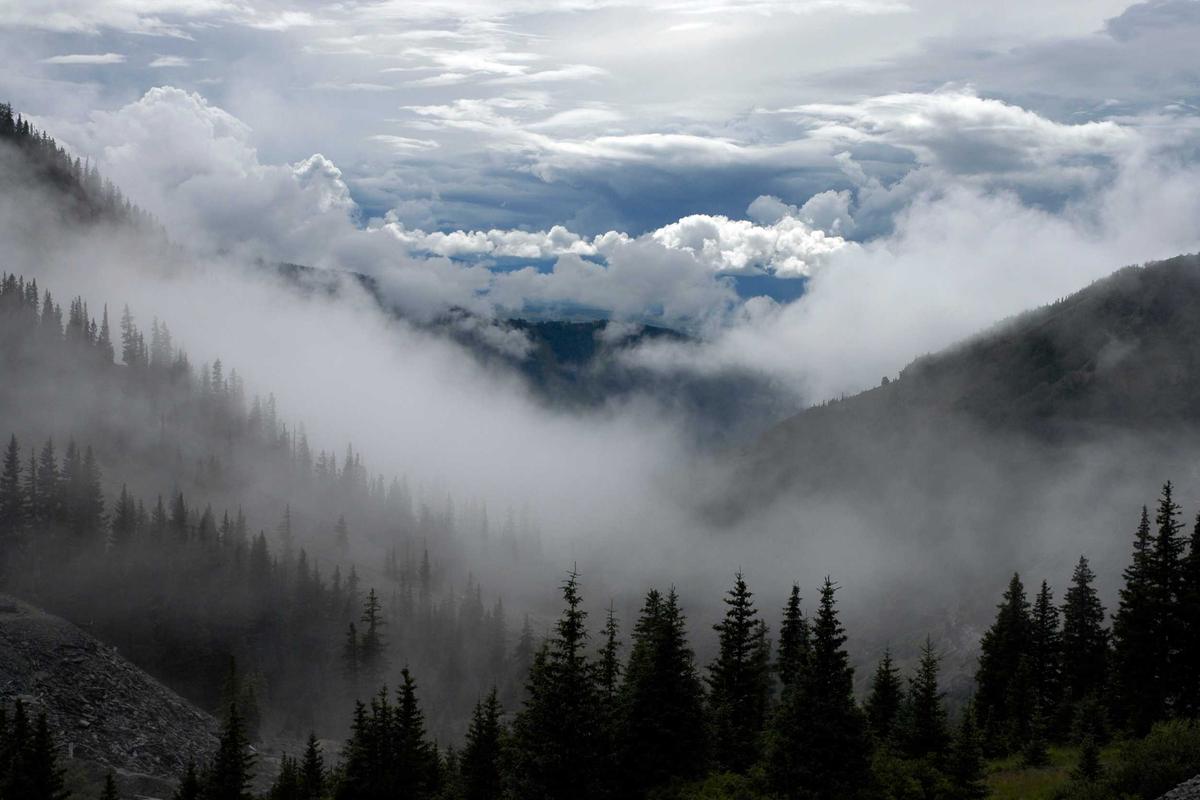
A colossal ice block, roughly the size of a double-decker bus, has been dislodged from the Khumbu Icefall, obstructing the primary ascent route on Mount Everest. British expedition teams have spearheaded efforts to clear a path, employing ice screws, ropes, and coordinated teamwork. The obstruction, located at an altitude exceeding 5,800 metres, highlights the accelerating instability of high-altitude glaciers due to rising global temperatures.
This event is a stark reminder that our planet's cryosphere is undergoing rapid transformation. The Khumbu Icefall is notorious for its dynamic and hazardous terrain. At 5,800 metres, it is the first major obstacle climbers face after Base Camp.
The recent block, measuring an estimated 10 metres in height and 6 metres in width, detached from the upper glacier and slid into the route. Sections of the icefall, which are usually stable in winter and spring, are now moving with unprecedented speed. Glaciologists from the University of Cambridge have been monitoring the region.
Dr. Rajan Tamang, a lead researcher, stated that the icefall has receded by 120 metres in the last decade alone. The current event is part of a broader pattern of glacier degradation.
British climber James Morrison, part of the Alpine Exploration team that helped clear the path, described the scene. The ice was a monolith, pale blue and cracked. We spent eight hours anchoring ropes and chiselling a route.
The exposure was immense. One slip, and you fall into a crevasse that didn't exist last year." The team successfully created an alternative route west of the original path, using 200 metres of fixed rope.
This detour adds roughly an hour to the climb to Camp One, but is currently deemed safe. The Everest climbing season is underway, with more than 400 permits issued this year. The Nepalese government has faced criticism for allowing commercial expeditions despite increasing risk.
However, the economic reliance on mountain tourism, which contributes nearly 400 million dollars annually, pressures authorities to keep the routes open. The British teams involved are working with the Sagarmatha Pollution Control Committee to install additional monitoring equipment. These instruments will measure ice movement, temperature, and crevasse formation in real time.
Data collected will help predict future collapses. Yet, the underlying cause remains clear: the Khumbu Icefall is melting. Carbon dioxide levels in the atmosphere are at 420 parts per million, the highest in over 4 million years.
The rate of warming in the Himalayas is double the global average. What we are seeing here is a symptom of a larger systemic failure. Climbers adapt by clearing ice blocks; the planet adapts by shifting its climate.
The latter process is far more consequential. For now, the route to the summit is open, but the margin for error is shrinking. Each year, the window of stable conditions narrows.
The mountain is not the same mountain it was a generation ago. The ice block that blocked the path this week is a physical manifestation of a 1.1 degree Celsius rise in global temperatures.
It is a piece of evidence that requires no interpretation. As Dr. Tamang mentioned, we are watching an ancient glacier vanish in real time.
And we are paying for the privilege. Each climbing permit funds not just logistics, but also research into how fast the ice is disappearing. That research confirms what the climbers saw this week: the ice is moving, and we are moving with it, trying to keep a path clear.